
Bacterial Colony Classification for BARDOT
Baclan
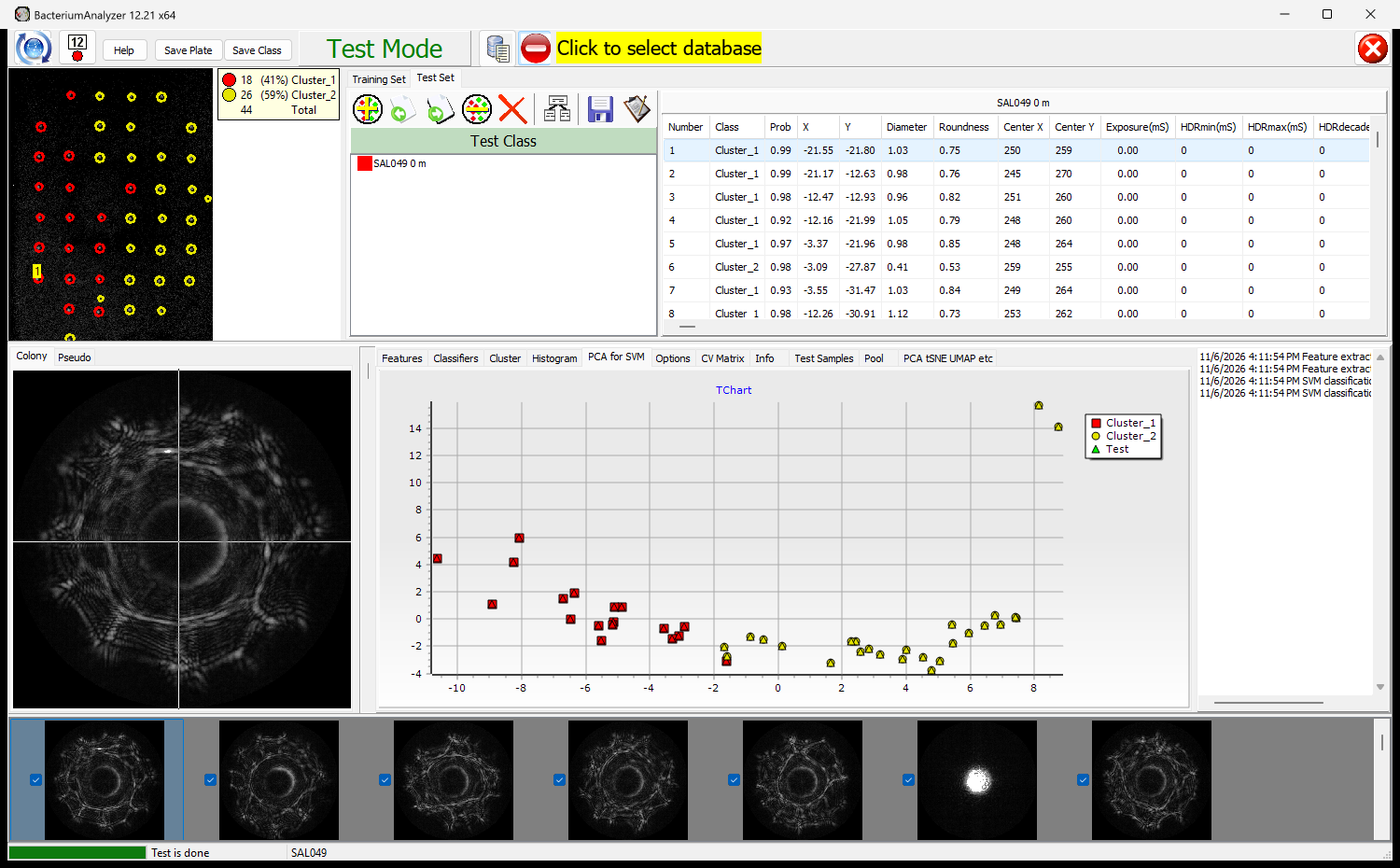
Baclan identifies bacterial colonies from their scatter patterns. A BARDOT instrument, driven by the BacBuster program, shines a laser through each colony on a Petri dish and photographs the light scattered forward. Baclan turns each of those images into numeric features and trains a support vector machine on colonies of known organisms.
It then classifies new plates colony by colony, with a probability for each, and shows the result on the image of the plate. Colonies can also be clustered and mapped with no model at all, and plates and models can be kept in files or in a database.
Windows 64-bit
Send comments to vpatseki_purdue.edu
- Plates from BacBuster's folders, from plate files or from a MySQL or MariaDB database
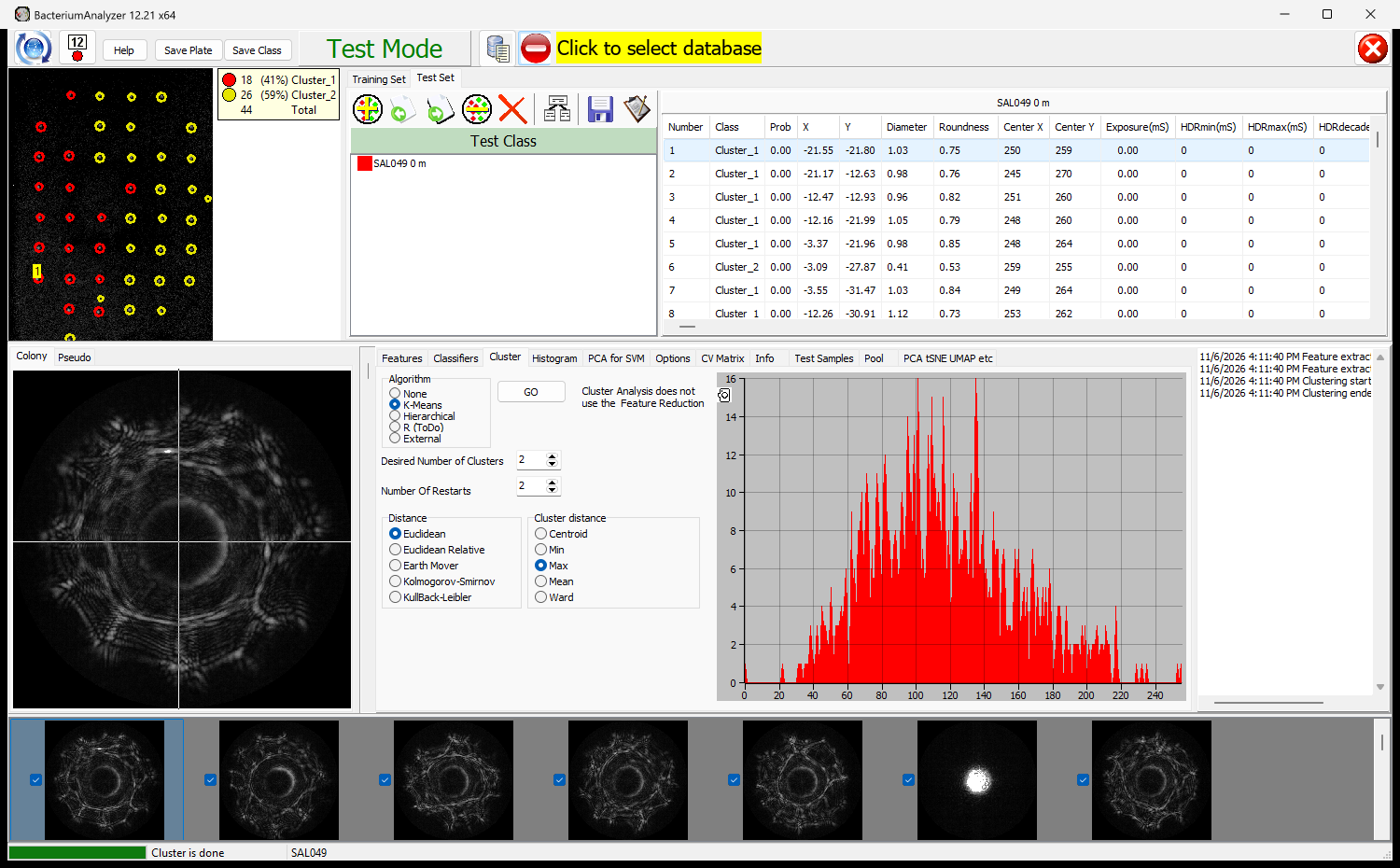
- Plate image with every colony circled and coloured by class, with thumbnails and a sortable table of the colonies
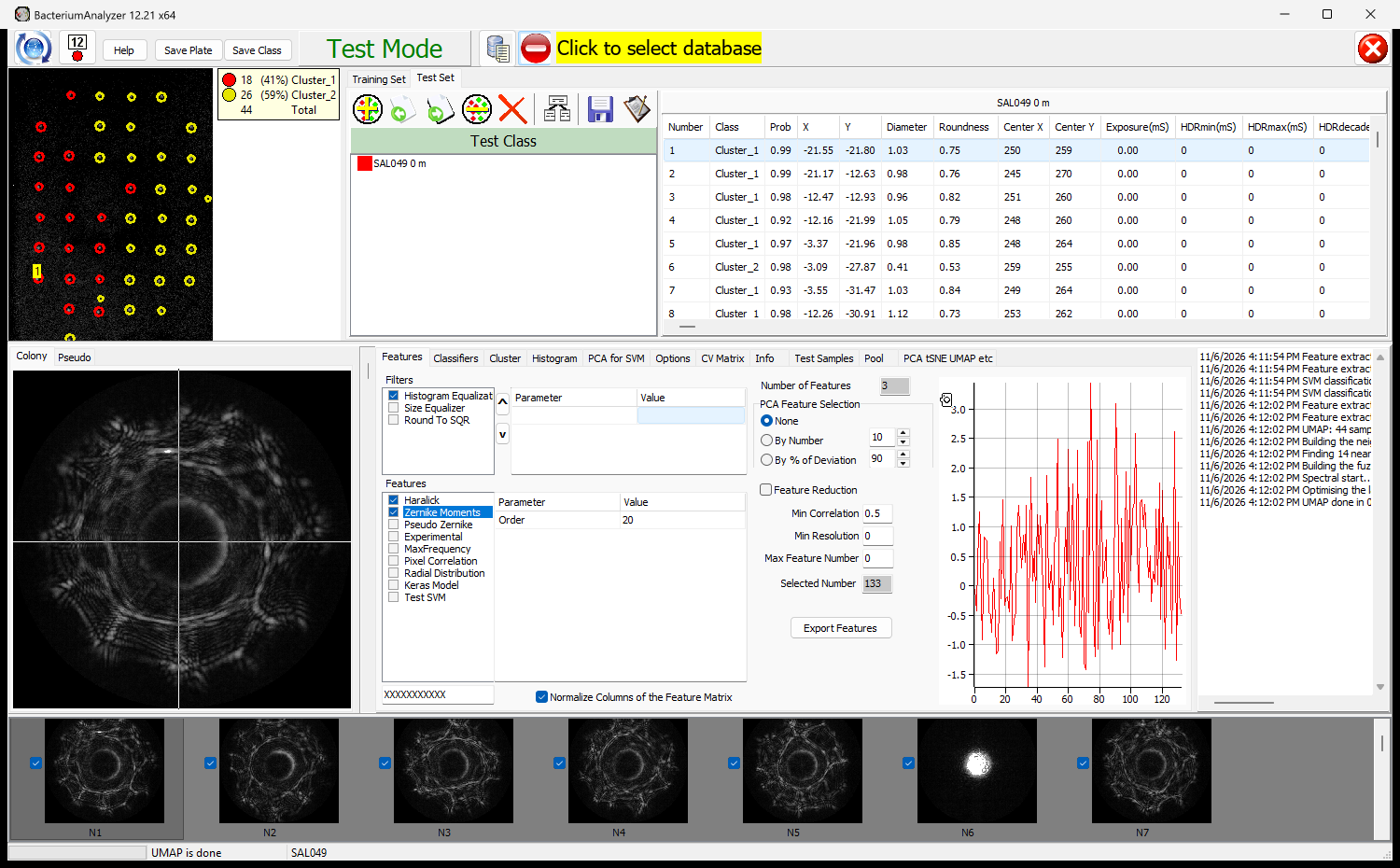
- Image filters: histogram equalization, size equalizer and round-to-square
- Features: Zernike and pseudo-Zernike moments, Haralick textures, pixel correlation, radial distribution, frequency features and Keras models
- Feature reduction by correlation and class separation, and PCA
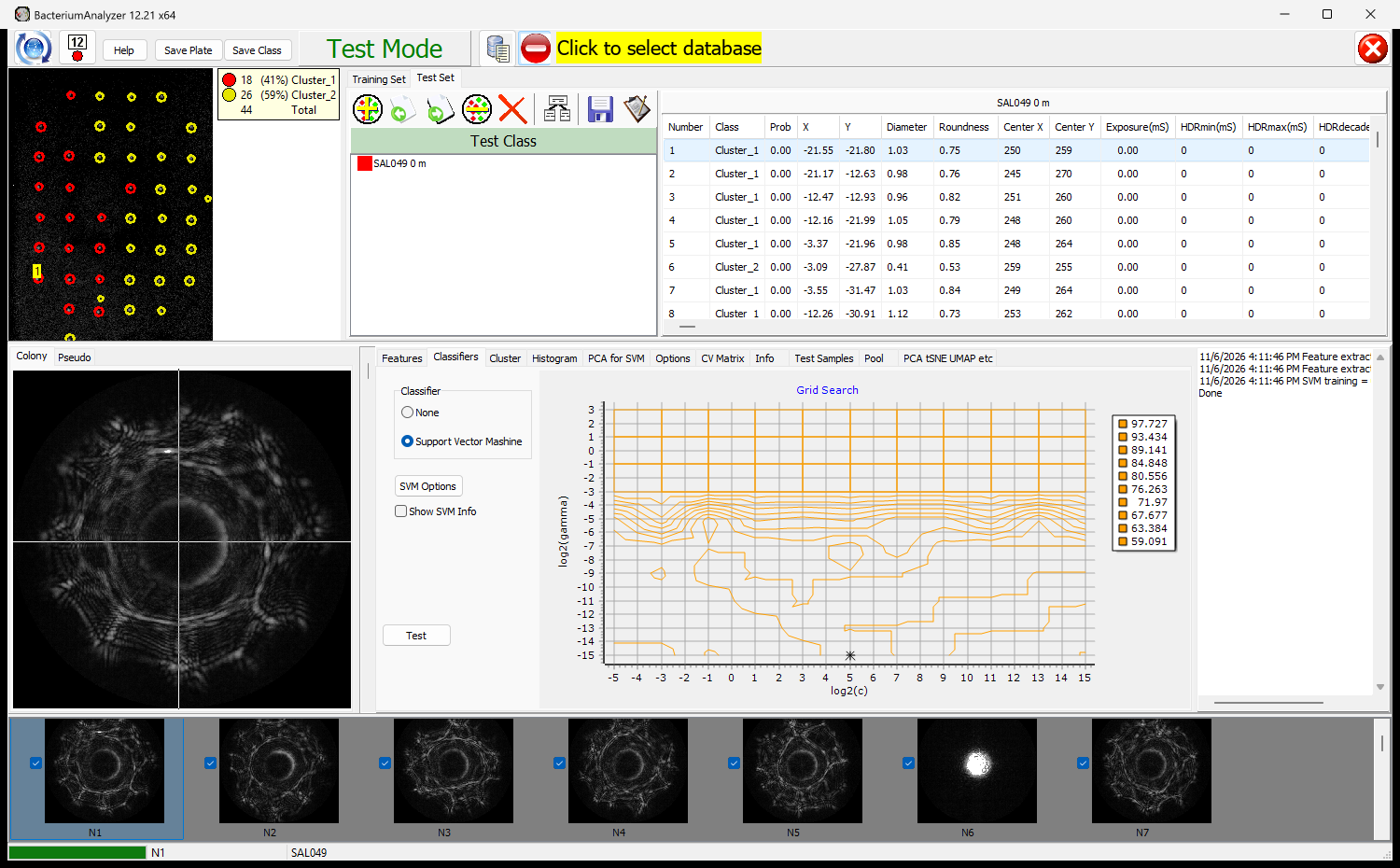
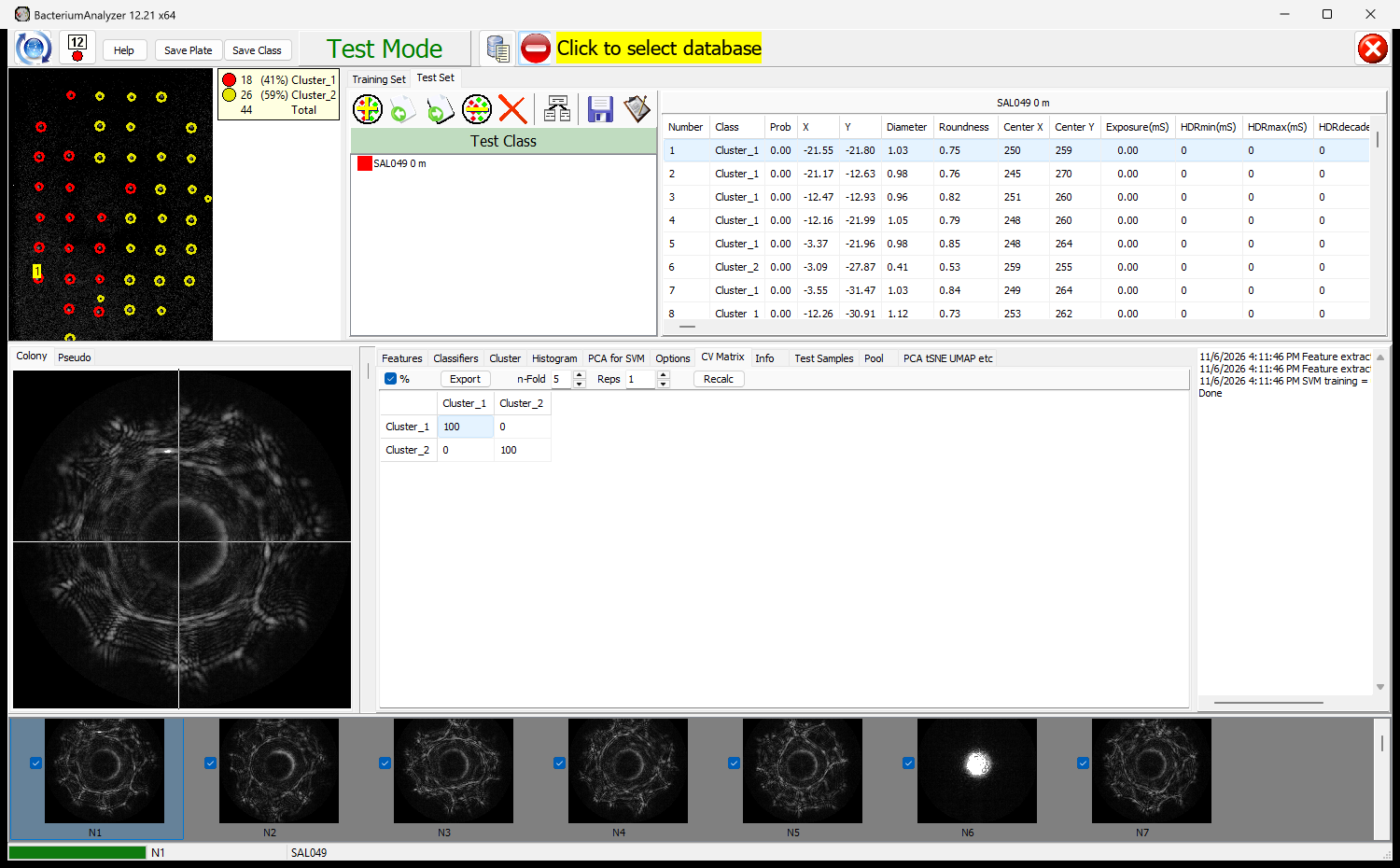
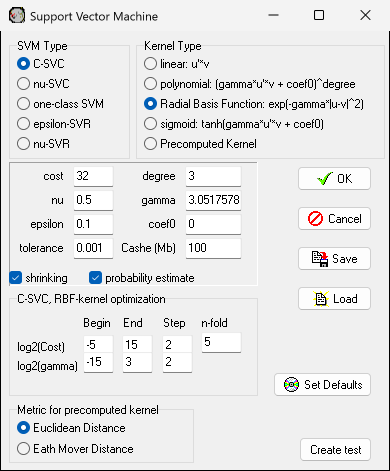
- Support vector machine with a grid search for its parameters, and a cross-validation matrix
- Whole plates classified colony by colony, with a probability for each, and a report saved with the plate
- Clustering: k-means, hierarchical, or by an external program
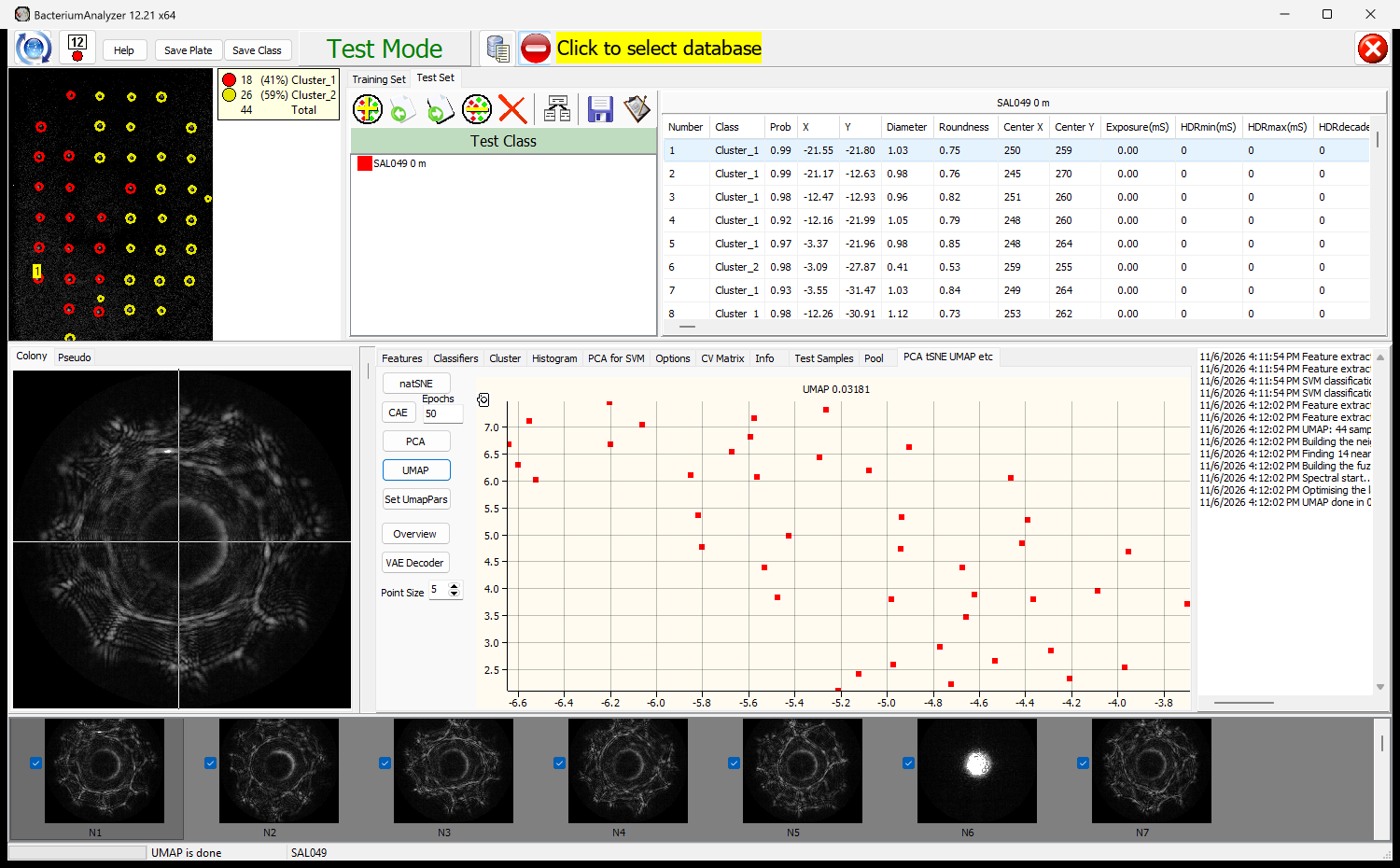
- Maps of the colonies with PCA, tSNE, UMAP and an autoencoder, with gating on the map
- Database control panel for browsing, copying and exporting plates, classes and models
- Plate Sieve for following colonies through a series of incubation times, and a search for similar colonies across databases
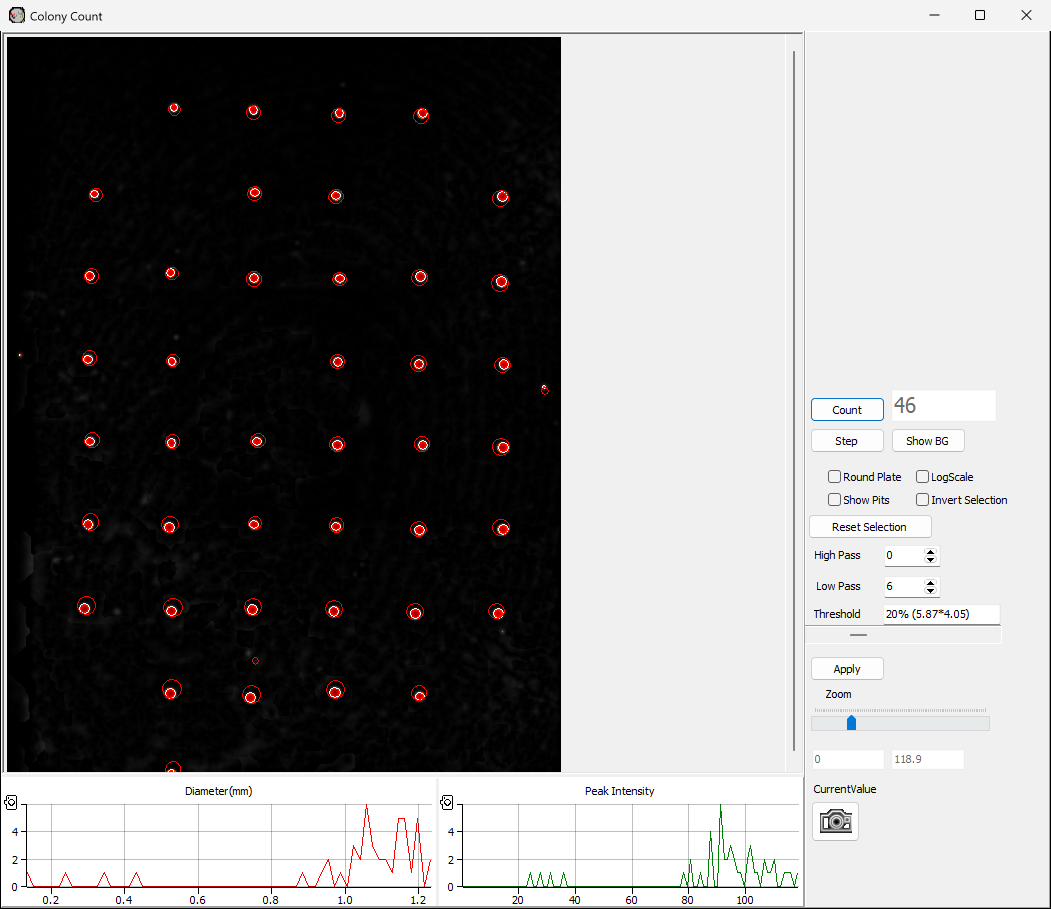
- Colony counting on the plate image
- Auto Mode for classifying from the command line
- Update check at start-up, and a built-in manual, opened with F1